Know Your Ferrous from Your Nonferrous Scrap Metals
When you’re getting ready to recycle old equipment, clear out a garage or clean up a job site, you might be surprised by how much metal you uncover (and how much money you can recover from those materials). From steel beams to old lawn chairs and appliances, scrap metal comes in all shapes, sizes and categories.
Especially if you’ve never visited a scrap yard before, it’s not common nature to know which type of metal is what. So, we created a guide that will walk you through what makes each type unique, why it matters, and how you can recycle responsibly (and get paid for it) at any SMI scrap metal recycling facility.
What’s the Difference Between Ferrous and Nonferrous Metals?
The most important distinction is whether the metal contains iron.
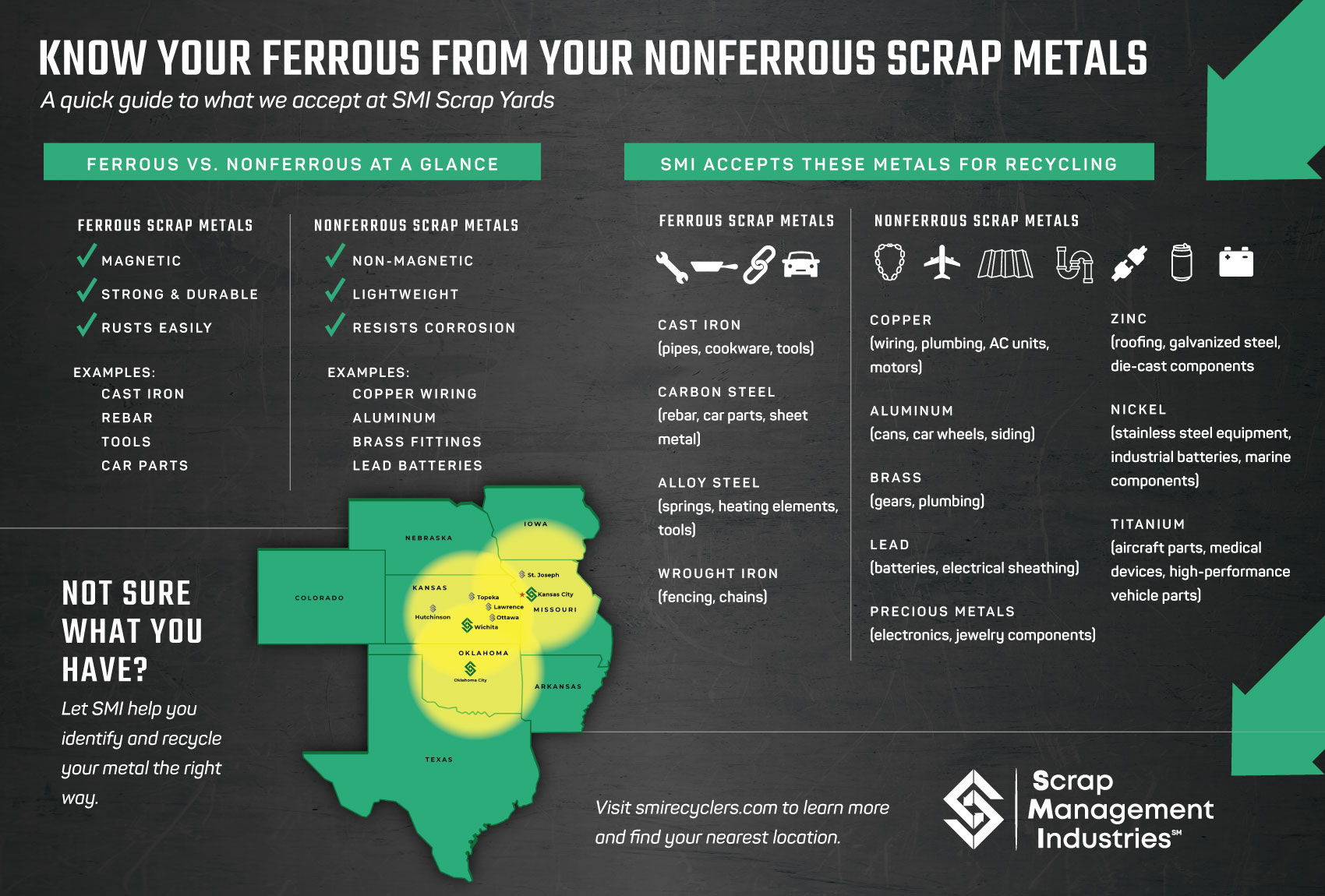
Ferrous metals contain iron.
Nonferrous metals do not contain iron.
This simple difference affects everything from how metals are used to how they’re sorted and valued at your local scrap yard.
Ferrous Metals: Strong, Durable and Magnetic
Ferrous metals are known for their strength and toughness. That’s why they’re common in construction, infrastructure and heavy machinery.
Key characteristics:
- Magnetic: A magnet will stick to most ferrous metals.
- Prone to rust: Because they contain iron, they oxidize easily when exposed to moisture.
- Heavy and dense: Ideal for structural support.
Common ferrous scrap examples:
- Cast Iron: Old pipes, cookware, radiators and engine blocks
- Carbon Steel: Rebar, car parts, structural beams and sheet metal
- Alloy Steel: Springs, heating elements and tools
- Wrought Iron: Decorative fencing, gates and chains
When you think of big, sturdy, rust-prone metals, you’re usually picturing ferrous scrap metal.
Nonferrous Metals: Lightweight and Corrosion-Resistant
Nonferrous metals don’t contain iron, which makes them lighter, more malleable and resistant to rust. They’re commonly used in wiring, plumbing, roofing and electronics.
Key characteristics:
- Non-magnetic: A quick magnet test will tell you it’s nonferrous
- Resists corrosion: Great for outdoor and marine applications
- Can be higher in value: Many nonferrous metals are in demand and priced higher per pound
Common nonferrous scrap examples:
- Copper: Wiring, plumbing pipes, motors and AC units
- Aluminum: Cans, car wheels, siding and window frames
- Brass: Plumbing fixtures, gears and hardware
- Lead: Batteries and electrical sheathing
- Zinc: Roofing materials and die-cast parts
- Nickel: Stainless steel equipment and batteries
- Titanium: Aerospace parts and medical equipment
- Precious Metals: Electronics, jewelry and specialty components
These metals are often more valuable to recyclers, which means they’re worth more money to you.
How SMI Makes Recycling Scrap Metal Easy
When you choose Scrap Management Industries, you’re partnering with a scrap metal recycler that’s been helping residents and businesses recycle metal responsibly for over 50 years.
Here’s what you can expect:
- Friendly, knowledgeable staff ready to answer your questions
- Clean, well-organized facilities with clear signage
- Safe unloading areas and professional equipment
- Transparent weighing and competitive pricing
- Prompt payment for your scrap
From old lawnmowers to copper wire and heavy iron beams, we accept a wide variety of metals. If you have questions about specific items, just call your nearest location and we’ll be glad to help.
Where You Can Recycle with SMI
We proudly serve communities in:
No matter which scrap yard you visit, you’ll find the same commitment to service, safety, and sustainability.
Frequently Asked Questions
Do I need to clean my scrap before bringing it in?
While clean materials are easier to process, minor dirt or debris is fine. Remove excessive contaminants like oil, chemicals or attached non-metal materials.
Will SMI take small loads?
Yes! Whether you have a trunk full or a trailer load, we’re glad to help you recycle it responsibly.
How do I know what my scrap is worth?
Metal prices change frequently based on market demand. Bring your materials in, and we’ll weigh them on certified scales and give you a transparent quote.
Does SMI accept appliances or vehicles?
We accept many appliances and vehicle parts. Call your nearest location if you’re unsure about specific items.
Ready to Recycle Scrap Metal?
Keep a quick reference on hand.
Download our handy Ferrous & Nonferrous Metals Guide
When you’re ready, stop by your nearest SMI location. We’ll help you identify your scrap, sort it properly, and make sure it’s recycled the right way.
Visit our locations page to learn more and find your nearest yard.